
From Disconnection to Oness
You can spend your days surrounded by family, friends, or coworkers and still feel deeply alone. At the same time, you can spend quiet hours by yourself and feel completely at peace. Loneliness is not about how many people are in the room; it is about feeling seen, understood, and connected.
- Why Loneliness Hits So Hard—and Why It Loops
Think of loneliness like hunger or thirst. It is your body and mind sending a natural signal that an important human need isn’t being met.
Long ago, belonging to a group kept humans safe. Because of that, when we feel disconnected today, our nervous system can quietly go on high alert. Over time, ongoing loneliness can show up in everyday ways:
- Feeling on guard: Becoming extra sensitive to signs of rejection or misunderstanding.
- Poorer rest: Finding it harder to unwind, sleep deeply, or bounce back from stress.
- Physical tension: Holding stress in your breath, jaw, shoulders, or stomach.
Loneliness can also turn into a quiet loop:
- You feel disconnected or misunderstood.
- You start expecting rejection and put your guard up.
- You pull back or keep conversations on the surface.
- Fewer chances for real closeness happen—making loneliness feel even heavier.
This is why simply telling someone to “get out more” rarely helps. When your nervous system feels guarded, the first step isn’t forcing social plans—it’s helping your body feel safe and open again.
2. How Yoga Looks at Disconnection
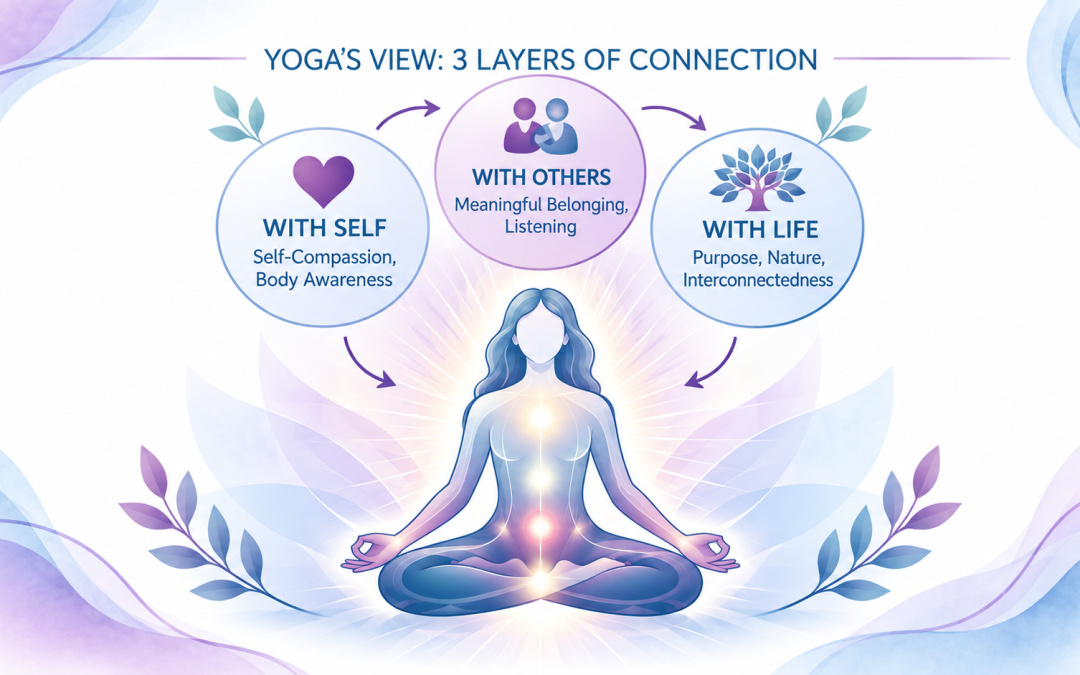
In yoga, disconnection isn’t just about other people. It often happens in three places at once:
- With others: Feeling unseen, holding back, or fearing rejection.
- With yourself: Ignoring your tiredness, judging your body, or pushing down how you really feel.
- With life around you: Losing a sense of purpose, wonder, or belonging in the world.
Yoga teaches that when we feel separate and guarded, fear naturally grows. When we feel connected and grounded, ease and trust return. Importantly, healing doesn’t mean forcing yourself to be positive or pretending everything is fine—it means gently rebuilding a friendly relationship with yourself first.
3. Practical Ways Yoga Therapy Helps You Reconnect
Yoga therapy works across your whole self—body, breath, mind, and daily habits—without rushing you:
AreaWhat It Looks Like in PracticeBody awarenessNoticing where loneliness or tension sits in your body without judging it.Gentle breathworkUsing slow, comfortable breathing to signal safety to a guarded nervous system.Mindful movementMoving gently to release held tension and feel at home in your body again.Deep restGiving your body true downtime to recover from everyday stress.Honest reflectionNoticing habits like people-pleasing or pulling away before you get hurt.Safe communitySpending time in welcoming spaces where you don’t have to perform.
Three Simple Steps to Start
- Reconnect with yourself: Pause for five minutes a day to check in with your breath and ask, “What do I actually need right now?”
- Reconnect with others: Start small with one person you trust. Being in a crowded room doesn’t cure loneliness—one real, unhurried conversation does.
- Reconnect with meaning: Step outside into nature, journal, or spend time with something that reminds you that you belong to a bigger picture.
Healthy independence and closeness go hand in hand. Being strong on your own doesn’t mean needing nobody—it means feeling steady enough inside that you can let good people in without losing yourself.
Questions for Gentle Reflection
- Where in my body do I feel tension or heaviness when I feel disconnected?
- Who in my life makes me feel safe enough to drop my guard?
- What is one small, kind thing I can do for myself—or reach out to share—this week?